Blog/ track record
Each person's profile, with their history
In many organizations every evaluation starts from zero and what is known about a person lives in their manager's memory. Having each person's full track record changes how decisions are made. What your organization finds in Eleva.
What does your organization know about a person who has worked there for eight years? In most cases, what their current manager remembers and what is in a folder nobody opens. Past evaluations are in spreadsheets from other years, courses are on a certificate, recognitions are in the memory of someone who has already left.
The problem: every year starts from zero
When the information about a person is scattered, every decision is made on the latest thing that happened. One bad year wipes out five good ones. A new manager has no way of knowing who they are getting. And when a promotion, a contract renewal or a replacement has to be decided, it is decided on impressions.
Why it matters
- Fairer decisions. A track record says more than a single evaluation.
- Continuity. Knowledge about people cannot leave with every manager who changes.
- Development. You can only support someone's growth if you can see where they come from.
- Backing. Faced with a complaint or an inspection, the organization needs to show the full history.
What a person's profile should bring together
- Their evaluations from each period, comparable with one another.
- The records of their work: recognitions and observations, with dates.
- Their education: degrees, studies and courses.
- Their improvement plans and what they achieved in them.
- The jobs they have held.
What you find in Eleva
The track record on a single screen
Each person's profile shows their results from each period. You can see the trend: whether they are improving, holding steady, and in which competencies they grew.

The personal record
The recognitions and observations a manager leaves are recorded with their date and become part of the person's history, which the person can see.
Education, validated
Each person can add their degrees, diplomas and courses, and the organization validates them. It is clear what education each person has, without relying on a physical folder.
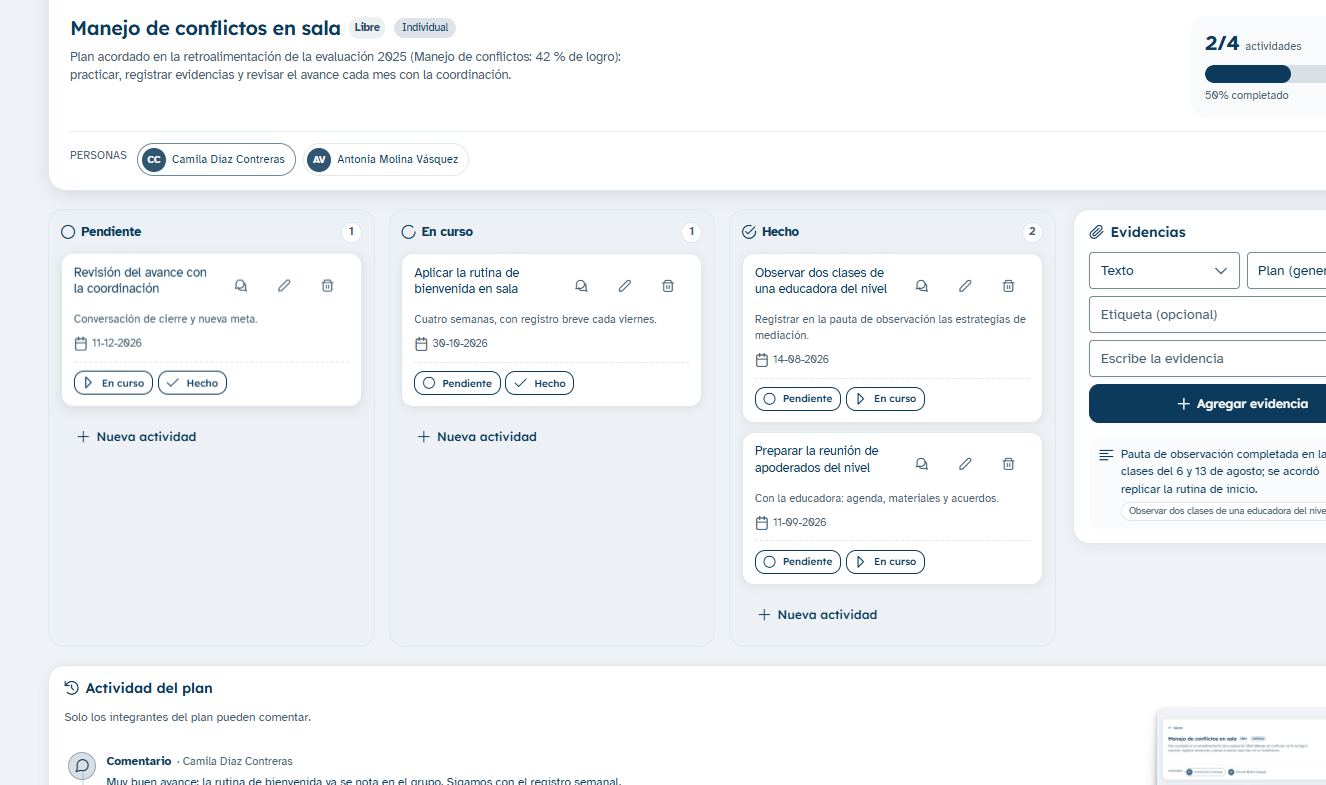
Their improvement plans
What they set out to improve, what they did and the evidence that they did it.
Everyone sees their own
The person sees their own profile. Their manager sees the profiles of their team. Senior management sees those of the whole organization. Nobody sees more than they should.
What changes
- A new manager knows their team from day one.
- Decisions about people are made looking at years, not weeks.
- People see their own progress, and that motivates more than any speech.
Each person's history is among an organization's most valuable assets, and also among the easiest to lose.